
This year, Women’s Learning Partnership (WLP) and our partners welcomed alumni from more than 30 countries to our Second Annual Alumni Celebration, bringing together advocates, trainers, and community leaders whose work reflects the power of shared leadership in action.
From Brazil, Uzbekistan, Egypt and beyond, participants came together to reflect on the journeys that began through WLP’s leadership and Training-of-Trainers (TOT) programs and to celebrate the networks and movements that continue to grow from them.
Have an alumni story to share? We'd love to hear it! Tell us your story here.
The event exemplified the very core of WLP’s work: change does not happen in isolation. It is built collectively through shared learning, courageous conversations, community action, and the unwavering belief that local leadership can create global change.
Below are just a few of the voices from this year’s alumni celebration.
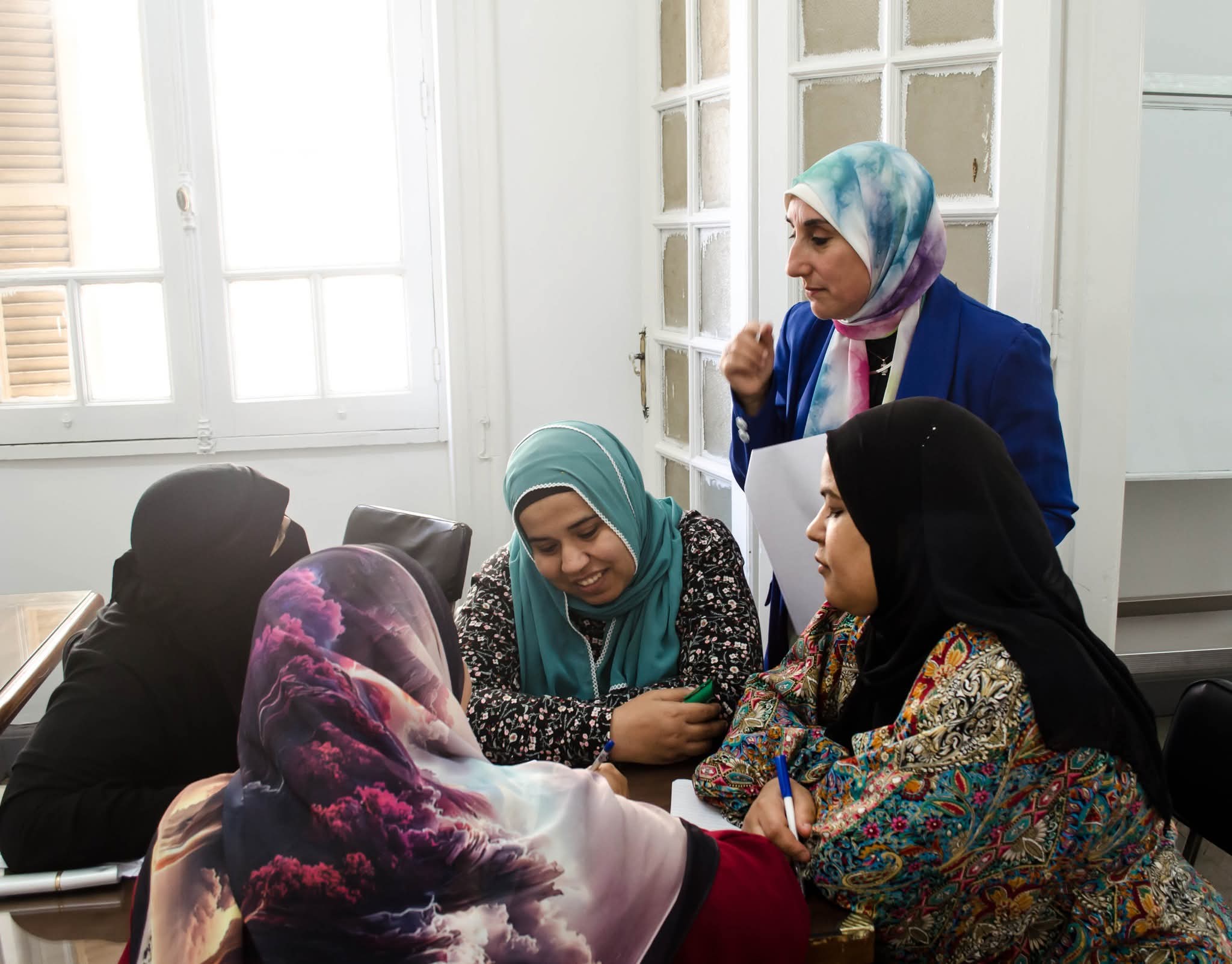
Nagwan Soliman Dobeai leads a training session with women in Egypt, strengthening leadership skills and building capacity for community advocacy.
“I Still Have More to Give”: Nagwan Soliman Dobeai’s Journey from Learner to Leadership Multiplier
To Nagwan Soliman Dobeai, leadership is not about authority. It is about participation, growth, and creating opportunities for others to lead.
A certified trainer, podcast host, and public sector leader in Egypt’s Port Said Governorate, Nagwan has spent years helping women strengthen their voices, build confidence, and take leadership roles in their communities.
“I have given a lot,” she said, “but I still have more to give.”
Nagwan first connected with WLP partner Forum for Women in Development (FWID) as a trainee in 2011. In a community where opportunities for innovative leadership training were limited, FWID provided a pathway to new skills, networks, and opportunities for civic engagement.
A WLP Training-of-Trainers (TOT) program became a turning point in how she understood leadership itself.
Reflecting on the experience, Nagwan recalled: “The TOT had the greatest impact on me. What stayed with me most was learning about new concepts of leadership in general and the evolution of the traditional concept into participatory leadership.”
That shift did not remain theoretical. Nagwan brought those lessons directly into her community.
The training quickly translated into action. After completing the TOT, Nagwan began facilitating leadership trainings for district and city leaders in Port Said, bringing participatory leadership practices into local government and civil society spaces.
Today, her leadership extends far beyond the training room.
Nagwan has launched several initiatives and podcast programs that explore issues ranging from women and media representation to cooperative culture and civic engagement. Through her podcast Homa Fahmohelna Keda, she creates space for conversations about women’s issues. Another initiative, Five Cooperatives, launched with the support of FWID, promotes awareness around cooperative work and community participation.
Despite everything she has achieved, Nagwan remains deeply committed to learning. Her advice to new participants is simple but powerful: never stop growing.
“Seize opportunities to work with organizations that genuinely care about people and development,” she said. “FWID helped develop my character for the better, as a trainer and as a person, and continues to support me. I am still learning and growing.”
For Nagwan, leadership is an ongoing journey of learning, sharing, and creating opportunities for others. It is a responsibility she continues to carry forward for her community and for the next generation.
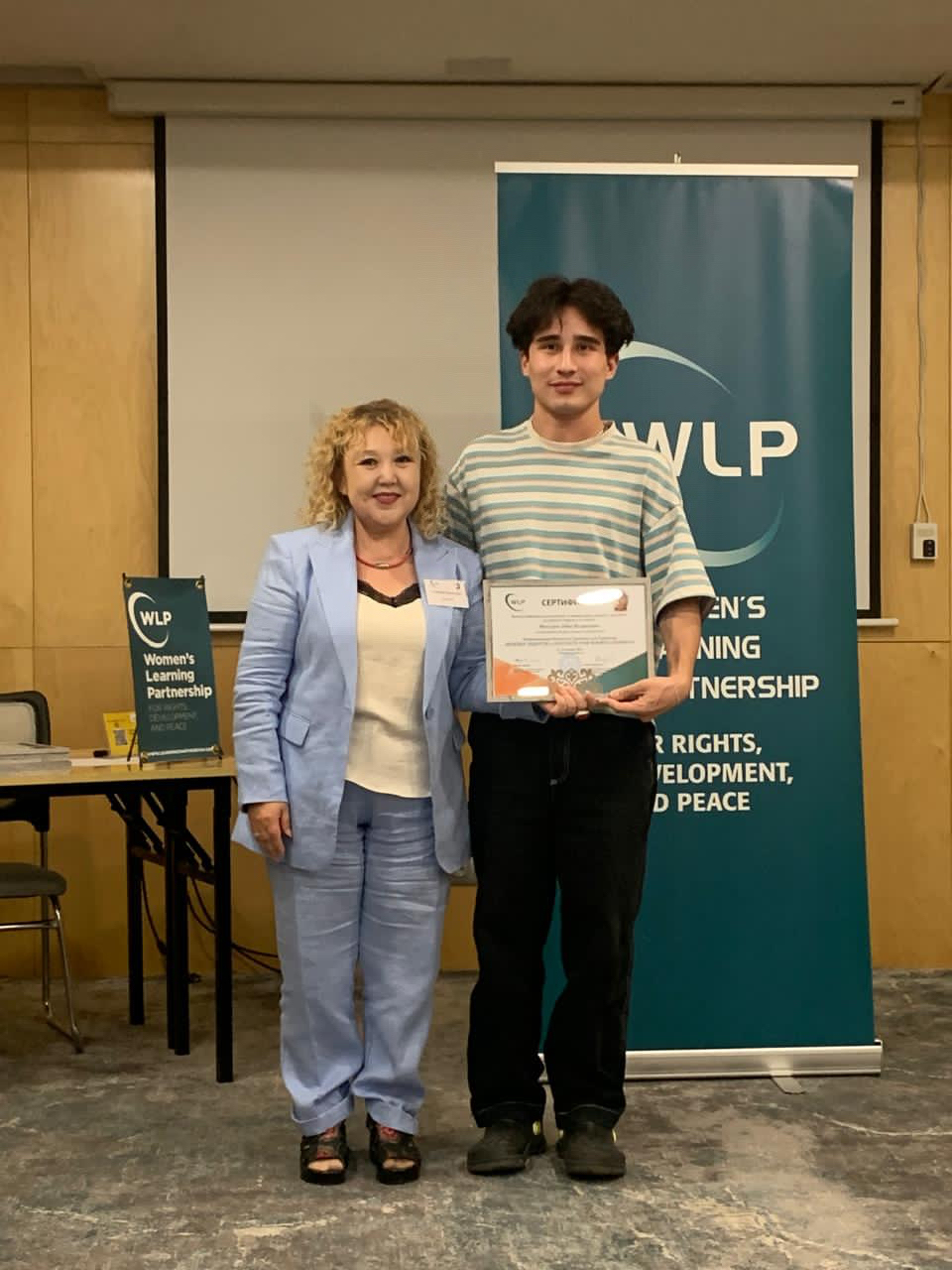
Abbos Mansurov stands alongside SWRC President Gulnara Karakulova after completing a training on human rights, climate justice, and inclusive leadership.
“Programs Like this Empower a New Generation of Leaders”: Abbos Mansurov on Regional Learning and Social Change
For Abbos Mansurov, leadership begins with listening, questioning assumptions, and ensuring that those most affected by social challenges have a voice in shaping solutions.
A civil society professional and youth advocate from Uzbekistan, Abbos works at the intersection of human rights, social inclusion, community resilience, and youth engagement. Through his roles with organizations and regional advisory bodies across Central Asia, he has focused on strengthening civic engagement and preventing violent extremism through people-centered approaches.
When he joined the WLP-supported leadership training hosted by Shymkent Women’s Resource Center (SWRC), he saw an opportunity to deepen his understanding of the connections between human rights, climate justice, and inclusive leadership. “What stayed with me the most was how the training connected personal experiences with systemic issues,” he explained. “The discussions on climate justice and its gender dimensions were particularly eye-opening.”
The training challenged him to think differently about leadership and his role in creating lasting change.
“Participation in this training was a truly transformative experience for me, both professionally and personally,” he said.
After the program, Abbos became more intentional about integrating gender-sensitive and human rights-based approaches into his work. He continued developing initiatives focused on youth engagement, community resilience, and social cohesion, while also approaching projects more strategically with long-term impact and sustainability in mind.
The experience also reshaped how he understood leadership itself.
“This experience made my work more reflective and people-centered,” he explained. “It reinforced the idea that leadership is not about visibility, but about responsibility and empathy.”
One of the most meaningful aspects of the experience, Abbos said, was the opportunity to learn alongside participants from across Central Asia. By bringing together leaders from Uzbekistan, Kazakhstan, Tajikistan, Kyrgyzstan, and Turkmenistan, the program fostered regional dialogue, shared learning, and collective approaches to common challenges.
“Programs like this do not just transfer knowledge,” he said. “They shape mindsets, build networks, and empower a new generation of leaders.”
His advice to future participants reflects the spirit of lifelong learning that was evident throughout the alumni celebration: remain curious, build relationships, and focus on how learning can be translated into meaningful action. Even small changes, he noted, can create lasting impact.
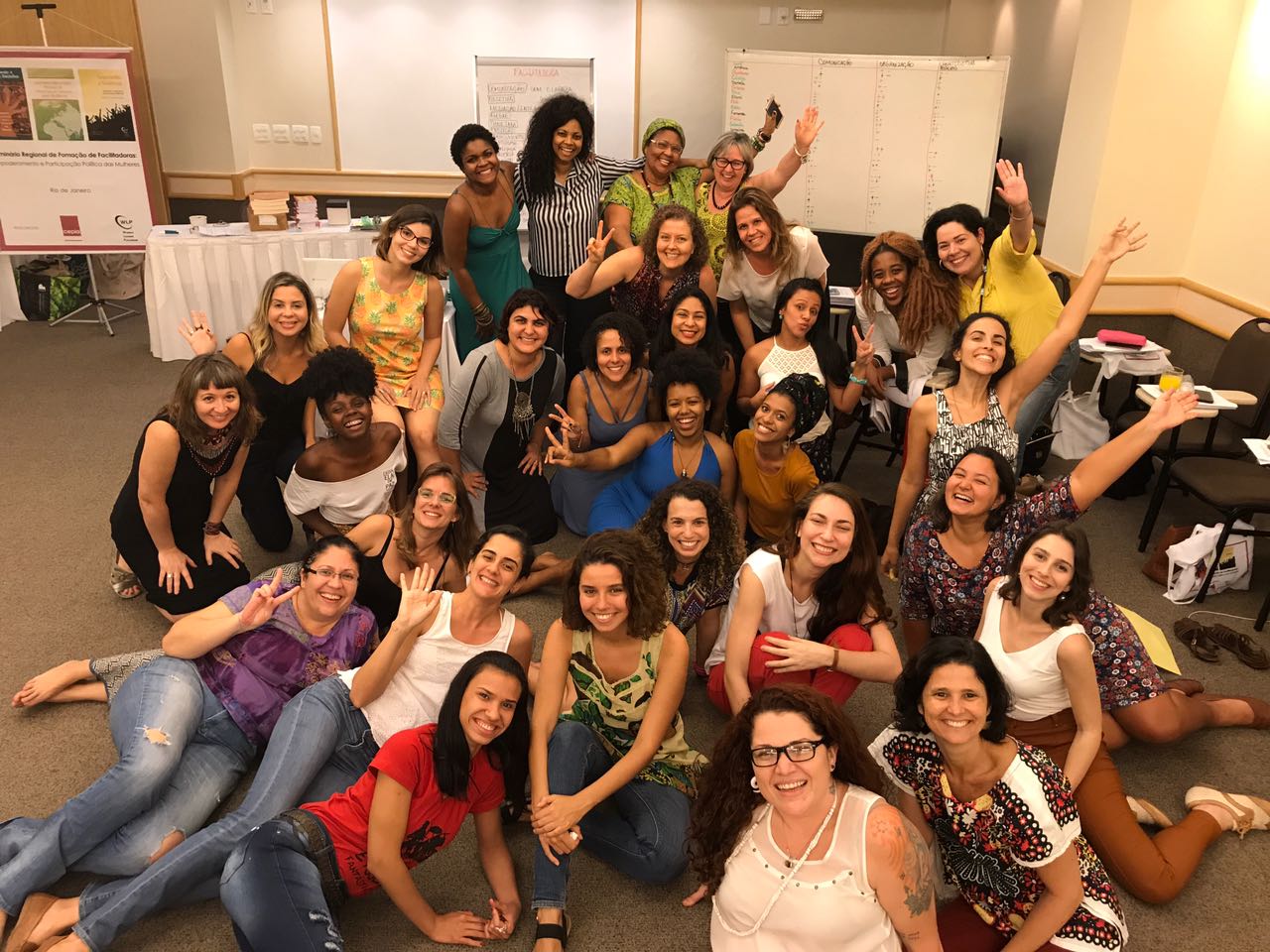
Participants in the 2017 Training-of-Trainers in Brazil pose together after a workshop dedicated to leadership development.
“The Greatest Power Lies in the Women Walking Alongside Us”: Daniela Lopes on Collective Leadership in Brazil
Daniela Lopes, a social worker, human rights advocate, and community leader from the Mangueirinha Favela Complex in Rio de Janeiro, has spent years organizing alongside women confronting violence, hunger, inequality, and systemic exclusion. But she traces much of her approach to leadership back to one transformative experience: Cidadania, Estudo, Pesquisa, Informação e Ação’s (CEPIA) TOT.
“I do not consider myself or any other woman to be an alumni or ‘ex-participant,’” Daniela said. “We are ongoing participants in an empowering process that only began with our training.”
When Daniela joined the TOT program in 2017, she was already working with women’s groups in her community as a social worker and human rights advocate. Years earlier, the military occupation of her territory by Rio de Janeiro’s security forces had exposed the urgent need for stronger community organization, leadership, and advocacy.
At the TOT, she found tools that expanded both her political vision and her practical strategies for collective action. For years afterward, Daniela carried the training manuals with her everywhere she went.
“I knew that, with them, I would have a foundation to mobilize any issue or group I worked with,” she said. “And, for me, sophisticated is what manages to be simple, accessible, and inclusive.” The training’s emphasis on networks and collective leadership became central to her work.
Since participating in the TOT, Daniela has continued as a trainee, facilitator, and consultant, helping expand WLP’s programmatic reach in Brazil and across Portuguese-speaking African countries. The methodologies she learned have shaped her work with Black women, survivors of domestic violence, mothers affected by state violence, women farmers, educators, and community entrepreneurs.
Today, Daniela coordinates the Solidarity Kitchens Forum of Rio de Janeiro, a movement that helped transform solidarity kitchens into an official emergency public policy to combat hunger in Brazil in 2024.
“Solidarity kitchens are not merely spaces for food distribution,” she explained. “They are spaces for grassroots organization, community protection, political education, and the restoration of dignity.”
The movement now connects nearly 2,000 community spaces across Rio de Janeiro, the vast majority organized by women.
For Daniela, the ability to coordinate networks at this scale comes directly from the lessons she learned through the TOT: listening deeply, building collectively, and recognizing networks as tools not only for survival, but for long-term transformation.
“The greatest power of this experience lies in the women walking alongside us,” she said. “It is these connections that sustain our journeys during difficult times, strengthen our leadership, and expand our capacity to transform the world from our territories.”
And Daniela knows firsthand what becomes possible when women organize together. “I am living proof of the power that emerges when women organize collectively.”
Her advice for anyone joining the WLP network? “Broaden your local perspectives; strive, and in this case–it is both advice and a wish for all of us–work toward common agendas that, despite geographical distances, are democratic, horizontal, and respect and strengthen regional and cultural specificities, serving as both support and inspiration for our local actions.”
A Global Community Continues to Grow
Although the alumni celebration lasted only an hour, the energy, connection, and inspiration shared across continents will continue far beyond the event itself.
What emerged clearly from every story is that WLP’s network is not a collection of past participants. It is a living, growing community of leaders and allies who continue to learn from one another, support one another, and organize for change together.
Their stories are a reminder that meaningful change rarely begins in positions of power. More often, it begins in local communities, in conversations, in classrooms, in kitchens, and in the determination of people who refuse to accept inequality as inevitable.
As this global network continues to expand, so does its impact and so does the possibility for a more just, inclusive, and connected future.
To everyone who joined us for this year’s celebration: thank you for continuing to lead, organize, and inspire. We cannot wait to see what this extraordinary community builds next.