
WLP strengthens women-led movements that challenge discriminatory systems, expand rights, and sustain feminist leadership across generations. Through collective advocacy, youth engagement, and feminist knowledge and narrative power, WLP helps movements translate local organizing into lasting structural change that strengthens continuity, leadership, and resilience across generations.
By challenging discriminatory laws and norms that shape women’s access to land, livelihoods, and resources, WLP’s movement-building work also advances economic justice alongside political and social change.
Legal Reform
Hundreds of millions of women face legal systems that restrict autonomy, limit access to justice, and reinforce economic inequality.
WLP strengthens women-led movements working to reform laws that shape women’s daily lives, ensuring that rights are not only recognized on paper, but realized in practice.
Across contexts, discriminatory laws limit women’s ability to own land, inherit property, access financial resources, secure livelihoods, and participate fully in public and economic life.
WLP supports collective legal reform efforts related to violence against women, family and personal status laws, inheritance, and nationality, land and property rights and personal status laws — recognizing that legal equality is foundational to economic justice.
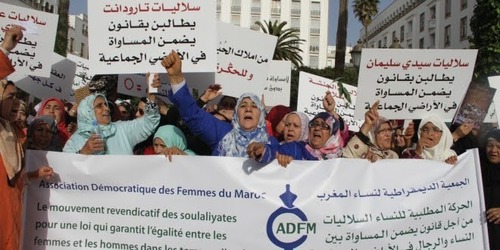
Soulaliyate Women Lead Land Rights Reform in Morocco
For nearly two decades, Soulaliyate women in Morocco organized to claim their equal rights to collective lands – challenging deeply entrenched discriminatory practices with the support of WLP’s partner, the Democratic Association of Moroccan Women (ADFM).
Through leadership and advocacy training grounded in WLP’s participatory curriculum, women strengthened their organizing, communication, and coalition-building skills – mobilizing a national movement for change.
Their sustained advocacy helped drive a 16-year campaign that contributed to the passage of Law 62.17, advancing gender equality in collective land rights.
In 2021, the movement successfully pressured the government to remove discriminatory language from a land distribution decree after presenting a petition signed by more than 20,000 supporters.
In 2023, Soulaliyate women formalized their leadership by establishing the National Committee of Soulaliyate Women (CNFS), ensuring continued advocacy, monitoring, and protection of indigenous women’s land rights across Morocco.
By challenging legal barriers to land ownership and resource control, WLP partners help women build economic independence and long-term security and full participation in public life. WLP’s approach combines feminist legal analysis with movement-based advocacy. Participants engage in local, regional, and global reform efforts, sharing strategies across borders and translating knowledge into coordinated action.
A key resource supporting this work is WLP’s Corpus of Law, a digital collection that brings together original texts, interpretations, and comparative examples from multiple countries. By highlighting successful reforms and advocacy strategies, the Corpus helps movements learn from one another and adapt approaches across contexts.
Family Law Reform
Inequality within the family remains one of the most persistent, and least visible, barriers to gender justice and women’s economic independence. Discriminatory family laws often restrict women’s rights in marriage, divorce, inheritance, nationality, mobility, work, and bodily autonomy and shape women’s access to resources, livelihoods, and decision-making throughout their lives.
WLP advances family law reform as a core movement priority, recognizing the family as a foundational site of power where economic dependence and inequality are often produced and normalized. When women lack equal rights within the family, their ability to own property, access income, claim nationality for their children, or participate in public life is fundamentally constrained.
Through global advocacy, shared analysis, and norm-shifting strategies, WLP works to transform the legal frameworks and social beliefs that sustain discrimination in the private sphere. This includes challenging patriarchal interpretations of law while advancing rights-based, egalitarian alternatives grounded in women’s lived realities.
WLP is a founding coordinating committee member of the Global Campaign for Equality in the Family, a founding steering committee member of the Global Campaign for Equal Nationality Rights, and coordinating committee member of the UN Women Equality in Law for Women and Girls by 2030 Initiative.
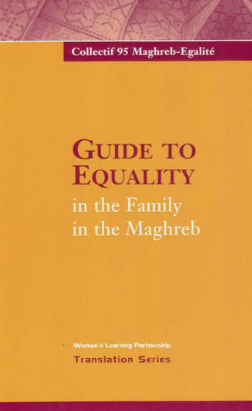
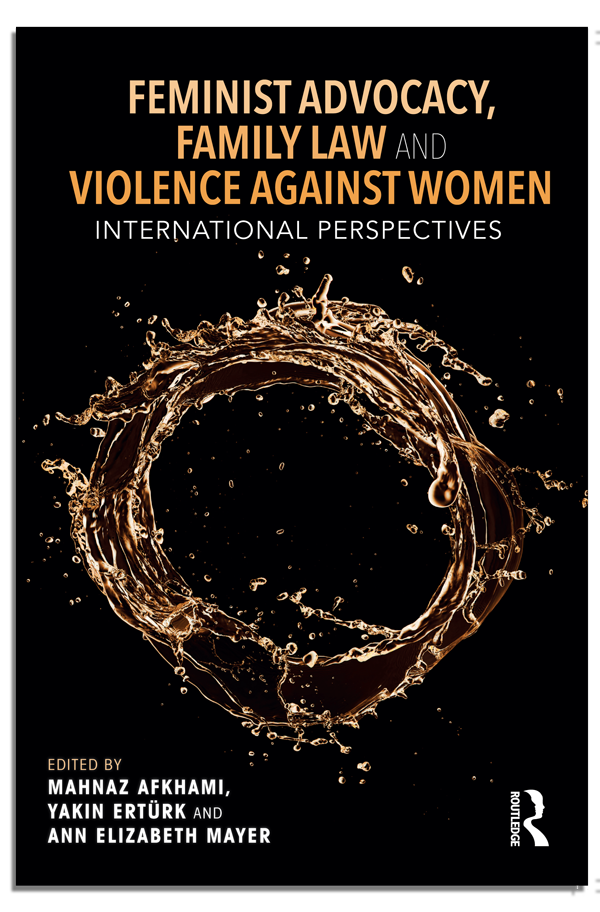
Explore some of our law reform resources below:
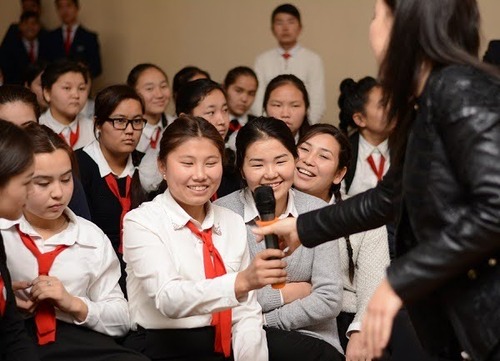
Young people are shaping the present and future of feminist movements. With half of the world’s population under the age of 25, WLP invests in youth leadership not as a parallel track, but as a core strategy for sustaining movements, renewing analysis, and expanding participation across generations.
WLP supports young feminist leaders to transform creativity into activism and activism into leadership. Youth-centered initiatives combine art, technology, and advocacy — using poetry, theater, film, digital campaigns, and social media to mobilize action on issues such as gender based violence, family law reform, civic participation, and economic justice.
WLP’s youth work is intentionally intergenerational. Programs connect emerging leaders with experienced feminist organizers, enabling the transfer of movement knowledge, strategy, and values while creating space for innovation and new forms of leadership. This exchange strengthens continuity and ensures that movements evolve without losing hard-won lessons.
Partners collaborate with universities, education boards, and existing youth networks to institutionalize leadership pathways while fostering peer networks and online communities for ongoing support. Youth facilitators and program managers play active roles in program design and implementation, ensuring meaningful participation and shared decision-making.
Across WLP’s work, youth alumni have gone on to launch organizations, mobilize communities, and assume leadership roles in advocacy and public life, demonstrating that young people are not future leaders, they are leaders now.
Feminist Knowledge and Narrative Power
Movements are sustained not only through action, but through continuity, legitimacy, and shared understanding. WLP builds feminist knowledge and narrative power by documenting women’s leadership, resistance, and organizing across the Global South so that movement intelligence is preserved, shared, and passed on across generations.
Too often, feminist struggles in the Global South are erased, fragmented, or marginalized within dominant historical narratives. WLP works to counter this erasure by safeguarding feminist knowledge through oral histories, case studies, interviews, and multimedia documentation created in collaboration with activists themselves.
This work is inherently intergenerational. By linking feminist knowledge from past and present struggles, WLP ensures that each generation of activists builds on collective experience and where lived experience becomes shared strategy in order to strengthen the movements’ ability to sustain progress over time.
Through initiatives such as the Oral History Project, WLP has gathered testimonies from women across dozens of countries while also training activists to document movements within their own communities. These resources are made widely accessible through WLP’s Resource Center and collaborations with institutions such as the Internet Archive and the British Library’s Sound Archive, supporting learning, solidarity, and movement resilience worldwide.