
Across the Global South, women are navigating overlapping crises — climate disruption, displacement, shrinking civic space, and violence — often with the fewest resources and the greatest responsibilities. WLP supports women to protect their rights, strengthen their safety, and lead community-driven responses that build resilience and advance gender justice.
Climate Justice
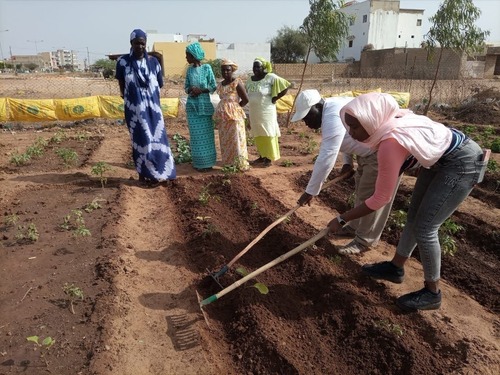
Climate change is reshaping lives and livelihoods across the globe, with the heaviest impacts falling on women and marginalized communities. WLP advances climate justice through women-led, inclusive approaches that address both environmental degradation and social inequalities that shape vulnerability and recovery.
Across regions, WLP partners center the leadership of women, who are often responsible for food production, water collection, and caregiving, yet are least resourced to respond to climate-driven crises. By strengthening women’s decision-making power, our work links environmental sustainability with human rights, economic security, and community well-being.
WLP’s climate justice initiatives include:
- Advancing women’s land and resource rights
- Challenging extractive industries and documenting environmental harm
- Supporting sustainable resource management and disaster risk reduction
- Training women and men in preparedness, emergency response, and long-term resilience strategies
- Through cross-border learning and locally led action, WLP helps ensure climate solutions are equitable, participatory, and durable
Through cross-border learning and locally led action, WLP helps ensure climate solutions are equitable, participatory, and durable.
Shrinking Civic Spaces
When democratic freedoms erode, women are often the first to be silenced, and among the most targeted for retaliation. WLP supports women activists, human rights defenders, and emerging leaders to navigate risk, challenge harmful norms, and sustain advocacy under increasingly restrictive conditions.
As civic space shrinks and political and digital violence intensifies, WLP provides women with mentorship, skills-building, psychosocial support, and cross-border networks that strengthen their ability to participate safely and effectively in public life — including in contexts shaped by conflict, displacement, and forced migration.
A core element of this work is constructive dialogue, a gender-transformative methodology that builds trust, shifts harmful social norms, and fosters connection across differences. Building on these principles, WLP launched the Cross-Border Coalitions for Gender Justice (CCGJ) initiative, beginning with Afghan and Iranian women and girls in-country and in the diaspora. Through advocacy, networking, mentorship, and e-learning, the CCGJ strengthens resilient, rights-based movements enabling young women to act as agents of inclusive democratic change even under the most repressive conditions.
Feminist Crisis Response
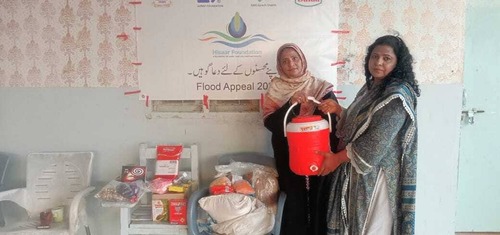
Disasters strike suddenly, but recovery and preparedness depend on local leadership. WLP brings together women-led organizations to guide emergency response, trauma-informed care, and long-term rebuilding, ensuring that crisis response advances gender justice rather than reinforcing inequality.
From climate-related disasters to conflict-driven instability, crises often intersect with displacement, economic precarity, and heightened risks of gender-based violence. WLP partners mobilize quickly to provide aid, facilitate services, support livelihoods, and advocate for protection while laying the groundwork for sustained recovery.
WLP’s feminist crisis response works in three phases: emergency, recovery, and resilience. Local women’s organizations coordinate culturally grounded aid, create safe spaces, address trauma, and advocate for protections related to violence, trafficking, and maternal health. Over time, partners strengthen preparedness through formal crisis planning and community-based resilience strategies. By centering inclusive decision-making and women’s leadership, WLP helps communities recover while building capacity to withstand future crises.
Violence Against Women
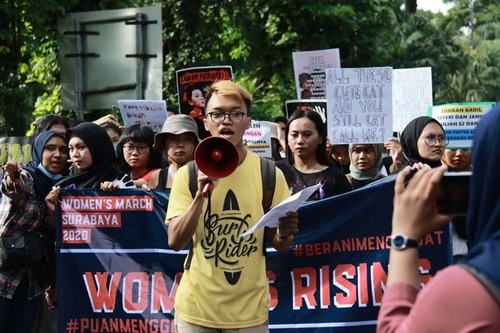
One in three women worldwide experience violence, yet systems designed to protect them often fail, especially in contexts of crisis, displacement, and political repression. WLP addresses violence against women through survivor-centered programming, leadership development, and collective advocacy that confronts harmful norms and advances transformative change.
Violence against women undermines families, communities, and economic progress. Even where laws exist, gaps in enforcement, weak institutions, and patriarchal power structures leave women vulnerable to abuse, harassment, trafficking, early marriage, and exploitation and these risks that are often intensified during conflict, migration, and humanitarian crises.
WLP works with women and men to prevent violence and strengthen accountability through education, leadership training, and advocacy. Our programs create safe spaces for survivors and communities to claim rights, build leadership, and mobilize for change.
Our curriculum, Victories Over Violence: Ensuring Safety for Women and Girls, draws on real-world case studies addressing violence in homes, communities, and public life. Our documentary From Fear to Freedom amplifies s global perspectives on the root causes of violence and the leadership of activists working to end it.