500
Ahead of Mozambique’s 2024 elections, Women’s Forum convened 500 women for a national conference to promote active participation as candidates, voters, observers, and election officials.

Women’s Forum is a Mozambican women’s rights network working to advance gender equality and women’s autonomy through advocacy, coalition-building, and capacity strengthening. The organization promotes women’s economic, social, political, reproductive, and environmental rights at local, national, and regional levels.
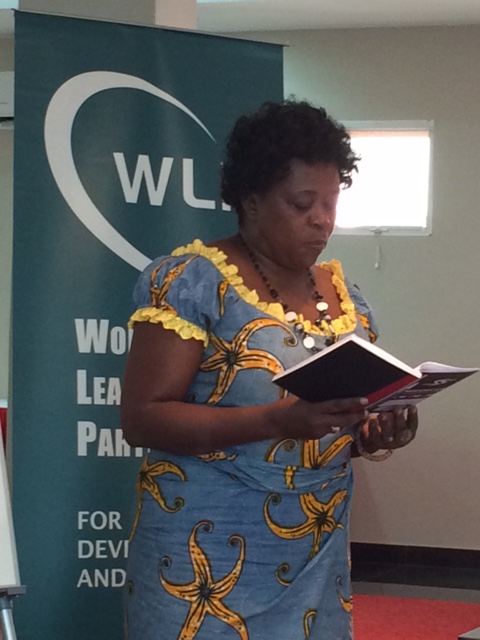
A facilitator reads a passage about communication skills in a Forum Mulher training of trainers workshop.
Founded in 1993 in Maputo, Women’s Forum (FM) is a national network of civil society organizations and activists working to advance gender equality and women’s human rights across Mozambique. Bringing together feminist leaders, community-based organizations, and advocates from across the country, FM works to promote structural, economic, and socio-cultural transformation that improves the lives of women and girls.
Rooted in collective action and feminist solidarity, FM strengthens the capacity of its member organizations while advancing advocacy on women’s political participation, economic justice, sexual and reproductive health and rights, climate justice, and the elimination of gender-based violence. The network works closely with rural women, community leaders, academics, journalists, activists, and political leaders to build stronger movements for gender justice and democratic participation.
A major focus of FM’s advocacy has been influencing legal and policy reforms that expand protections and opportunities for women and girls in Mozambique. The organization has contributed to reforms related to family law, women’s land access, labor protections, and social rights, while also supporting public dialogue and civic engagement during periods of political tension and post-election unrest.
Since joining Women’s Learning Partnership in 2014, FM has integrated WLP leadership methodologies and curricula into its trainings and advocacy initiatives while strengthening Lusophone regional feminist collaboration. Working primarily in Portuguese, the network continues to expand opportunities for women’s leadership and civic participation across Mozambique.
Driven by a vision of a world free from violence, sexism, and oppression, FM remains one of Mozambique’s leading feminist coalitions, mobilizing communities and organizations nationwide to advance equality, peace, and social justice for all women and girls.

A group of participants discuss women's roles in politics and ending gender-based violence during a Forum Mulher workshop in Maputo.
Mozambique continues to face significant challenges linked to economic hardship, climate-related shocks, and regional insecurity. These pressures contribute to deepening inequalities and affect access to essential services such as education, healthcare, and economic opportunity, particularly for women and underserved communities. Conflict, climate disasters, and widespread poverty continue to have disproportionate impacts on women and girls.
Women’s rights organizations, community leaders, and civil society actors continue to play a critical role in advancing participation, resilience, and human rights at local and national levels. Efforts to support women’s leadership and community-driven solutions remain central to building more inclusive, equitable, and resilient systems.
Our responsibility is to help women to be able to say ‘No’ when they don’t want something and ‘Yes’ when they do want something. First of all, women have to say yes to themselves: ‘Yes, I want to be myself. I want to take control of my life.' This is [what] can help women fight together for change.