15
In 2021, the African Union adopted 15 policy demands from rural African women championed through years of GIPS/WAR-led advocacy.

GIPS/WAR is a women’s rights organization based in Senegal working to advance the economic, social, and cultural rights and leadership of women in both rural and urban communities. Through training, advocacy, and community-based programming, the organization promotes women’s leadership, strengthens access to resources, and supports efforts to end gender-based violence and inequality.
Founded in 2004 in Thiès, Group for Initiatives for Social Progress/West Africa Region (GIPS/WAR) is a women-led organization rooted in rural and community-based organizing advancing women’s leadership, economic autonomy, and environmental sustainability across Senegal. With a strong membership base and broad community partnerships, GIPS/WAR works to strengthen the rights of rural and urban women through advocacy, training, and community-based development initiatives.
Dedicated to gender justice, climate resilience, and food sovereignty, GIPS/WAR focuses particularly on women’s land rights, sustainable agriculture, and natural resource management. The organization supports women farmers in gaining access to land, improving environmentally sustainable farming practices, and participating more fully in local, national, and international decision-making processes related to land, climate, and development policy.
As Senegal faces growing challenges linked to environmental degradation, flooding, and rapid urbanization, GIPS/WAR works to build community resilience while expanding opportunities for women and girls to lead within their communities. Its programs combine technical support, leadership training, political participation initiatives, and gender-based violence prevention efforts to strengthen women’s social, economic, and civic participation across the region.
Since joining Women’s Learning Partnership in 2014, GIPS/WAR has integrated WLP methodologies into its leadership trainings, advocacy campaigns, and community organizing programs. Working primarily in French and local languages, the organization has strengthened women’s leadership and amplified community-based advocacy efforts throughout Senegal and West Africa.
Through its leadership in the Kilimanjaro Initiative and related regional campaigns, GIPS/WAR has helped elevate the voices and priorities of rural women on continental and global platforms, contributing to greater recognition of women farmers’ rights and climate justice concerns within African Union land and environmental policy discussions.

A group of women convene in Thies, Senegal, for an event during the 16 Days of Activism Against Gender-Based Violence Campaign.
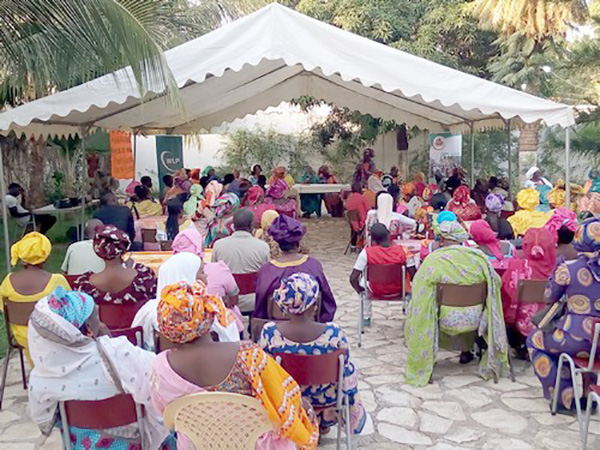
WLP’s partner in Senegal, GIPS/WAR, organizes events and rallies to correspond with the worldwide 16 Days of Activism Against Gender-based Violence campaign.
Senegal has a long tradition of civic engagement and community leadership, with civil society playing a central role in shaping public life. While progress has been made in areas such as education and political participation, social and economic inequalities continue to limit access to opportunity for many, particularly women and marginalized groups. And although women have made gains in political representation, they continue to face economic disparities, harmful social practices, and uneven access to resources.
Women’s rights organizations, rural women’s networks, and civil society advocates continue to play an important role in advancing inclusion, leadership, and civic participation. Their efforts remain central to strengthening democratic engagement, promoting gender equality, and expanding access to resources and opportunity.
How can a woman who lives in her village, because she is a woman, have no right to land, inherit no land, and not even have a space to cultivate to live?