Citizenship, Study, Research, Information, and Action

Citizenship, Study, Research, Information, and Action

Cidadania, Estudo, Pesquisa, Informação e Ação (CEPIA)
Rio de Janeiro

CEPIA advances women’s rights and human rights in Brazil through research, advocacy, public education, and leadership development. Since its founding in 1990, CEPIA has worked to address gender inequality, gender-based violence, reproductive justice, and democratic participation, with a particular focus on youth and historically marginalized communities.

Click Here to Access Resources for Brazilian Activists

Partner Focus Areas

Gender equality and human rights advocacy
Sexual and reproductive rights and justice
Access to justice and ending gender-based violence
Youth leadership, education, and capacity building

Partnership Highlights

Partner since 2004
Conducted leadership and human rights trainings across Brazil and Lusophone Africa
Collaborated on advocacy and research related to family law reform and democratic participation
Strengthened cross-regional feminist dialogue among Portuguese-speaking women’s organizations
Read more
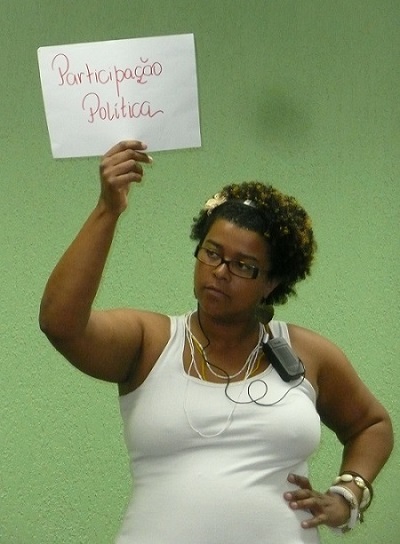
WLP Brazil/Cepia 2012 workshop participant holding sign for political participation

A participant in a CEPIA workshop voices her demand for women's political participation.

About CEPIA

Founded in 1990, Citizenship, Study, Research, Information, and Action (CEPIA) advances gender equality, human rights, and democratic participation through research, advocacy, education, and feminist movement building. For over 35 years, CEPIA has worked to expand access to justice, strengthen reproductive and sexual rights, prevent gender-based violence, and support  women, youth, and historically marginalized communities across Brazil and the region. 

Grounded in intersectional feminism and social justice, CEPIA combines policy advocacy, public education, leadership development , and cross-border collaboration to advance  systemic change. The organization works with social movements, policymakers, educators, and grassroots leaders to influence public policy and broaden civic participation. 

A leader in youth empowerment, CEPIA engages hundreds of adolescents each year through peer-led workshops  and public campaigns on digital citizenship, reproductive health, gender equality, and violence prevention. 

Since joining Women’s Learning Partnership in 2004, CEPIA has played a key role in regional advocacy, curriculum development, and transnational feminist organizing, including leadership trainings across Brazil and Lusophone Africa. 

Amid ongoing political polarization and threats to democratic institutions in Brazil, CEPIA remains a steadfast advocate for justice, equality, and inclusive democracy.

400
+

Each year, CEPIA’s youth empowerment initiatives engage more than 400 adolescents in peer-led learning on gender equality, digital citizenship, and reproductive health.

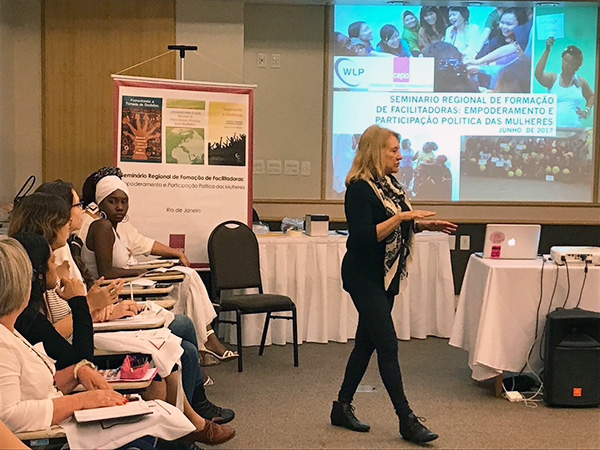
Jacqueline-Presenting-TOT17

Jacqueline Pitanguy, WLP Board member and Founder of CEPIA, gives a presentation at a National Training of Trainers workshop in June 2017.
Key Accomplishments

  • Launched a national reproductive justice campaign in 2025 highlighting the continued impact of Brazil’s 1940 abortion laws and advocating for legal reform grounded in public health and human dignity. 
  • Organized the #MulheresPeloClima campaign for International Women’s Day 2024, strengthening connections between feminist and environmental justice movements. 
  • Contributed to advocacy efforts supporting amendments to Law 1604/22, expanding emergency protective measures for women experiencing violence and recognizing psychological violence as a crime. 
  • Supported legal advocacy before Brazil’s Federal Supreme Court challenging restrictions on discussion of gender and sexual orientation in schools. 
  • Convened the 2022 Latin America Regional Partners Convening on women’s political participation and political violence, bringing together feminist leaders from across the region and published a guide on political violence against women in Latin America. 
  • Facilitated leadership and democratic participation trainings for women from Brazil, Mozambique, and Angola. 
  • Led advocacy efforts contributing to the adoption of municipal legislation addressing sexual violence against children and adolescents. 
  • Produced publications, podcasts, and digital resources focused on democracy, women’s political participation, reproductive justice, and digital security.
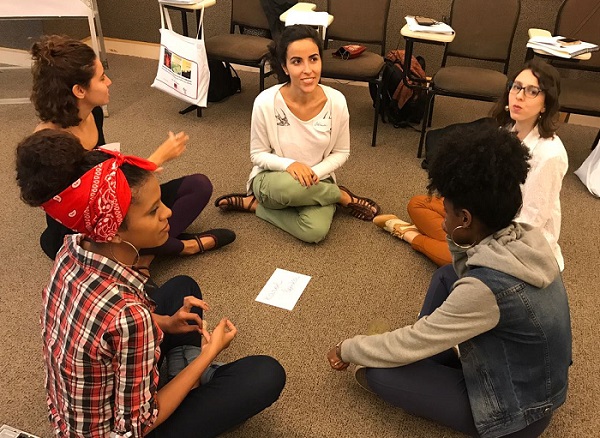
WLP Brazil/Cepia Training of Trainers discussion circle

Young women discuss human rights and leadership in a CEPIA workshop in Brazil.

Organizational Programs and Activities

  • Human Rights and Public Dialogue: Conducts research, public education initiatives, and multi-sector dialogues addressing women’s rights, democracy, gender equality, and social justice. CEPIA organizes seminars, conferences, campaigns, and discussions with policymakers, legal professionals, activists, educators, and civil society organizations. 
  • Advocacy and Public Policy Monitoring: Monitors Brazil’s implementation of constitutional and international human rights commitments and develops policy recommendations related to gender equality, reproductive justice, and violence prevention. CEPIA contributes to national advocacy campaigns and legal reform initiatives, including efforts related to the Maria da Penha Law and the Convention of Belém do Pará. 
  • Youth Leadership and Education: Facilitates workshops and training programs for adolescents, teachers, and youth leaders focused on citizenship, reproductive health, digital safety, leadership, and gender equality. CEPIA supports peer-led learning and youth-produced campaigns addressing issues affecting young people. 
  • Digital Engagement and Communications: Uses digital platforms, webinars, podcasts, publications, and campaigns to expand public dialogue on women’s political participation, reproductive justice, gender-based violence, and democratic rights. 
  • Regional and Lusophone Feminist Collaboration: Promotes exchange and solidarity among women leaders and organizations in Brazil, Angola, Mozambique, and across Latin America through joint trainings, advocacy initiatives, and leadership development programs.

About Brazil 

Brazil is marked by deep social and economic inequality, persistent racism, gender-based violence, and increasing political polarization. These challenges disproportionately affect women,  particularly Black, Indigenous, low income, and marginalized communities, shaping unequal access to justice, political participation, and healthcare, education, and economic opportunity. 

Despite significant feminist organizing and legal advances, violence against women remains widespread, reproductive rights continue to face political contestation, and democratic institutions have come under growing pressure in recent years. At the same time, feminist movements across Brazil continue to play a vital role in defending human rights, expanding civic participation, and advancing more inclusive and equitable public policies. 

  • Population: 213.4 million 
  • Region: South America 
  • Government: Federal Presidential Republic 
  • Women in Parliament: 17.5% 
  • Female Labor Force Participation: 53% 
  • Key issues: Gender-based violence, racial inequality, democratic participation, reproductive justice, and protections of Black, Indigenous, and marginalized women.
Hide
See More