
We are resilient, and even in the face of overwhelming challenges and uncertainty, we must hold onto that hope. It is our strength that will guide us through, as we continue to fight for a life of dignity and prosperity. Together, we can find our way.
Afghan Activists and Scholars
Afghan Activists and Scholars
Kabul
For decades, WLP has collaborated with Afghan activists, scholars, and women leaders to advance gender equality and defend women’s human rights in Afghanistan and across the region. These partnerships have focused on sustaining women’s leadership, expanding access to education and civic participation, and strengthening feminist organizing under increasingly restrictive conditions.
Partner Focus Areas
Women’s leadership development and movement building
Cross-border feminist solidarity and coalition building
Advocacy for women’s human rights and civic participation
Professional development and leadership support for women in remote and restricted environments
Partnership Highlights
Partnered with Afghan activists and scholars for decades
Launched the Cross-Border Coalitions for Gender Justice (CCGJ) initiative
Amplified advocacy and movement-building efforts through global networks and UN CSW engagement
Developing leadership and professional learning initiatives for Afghan women
Read more
 Hide
Hide
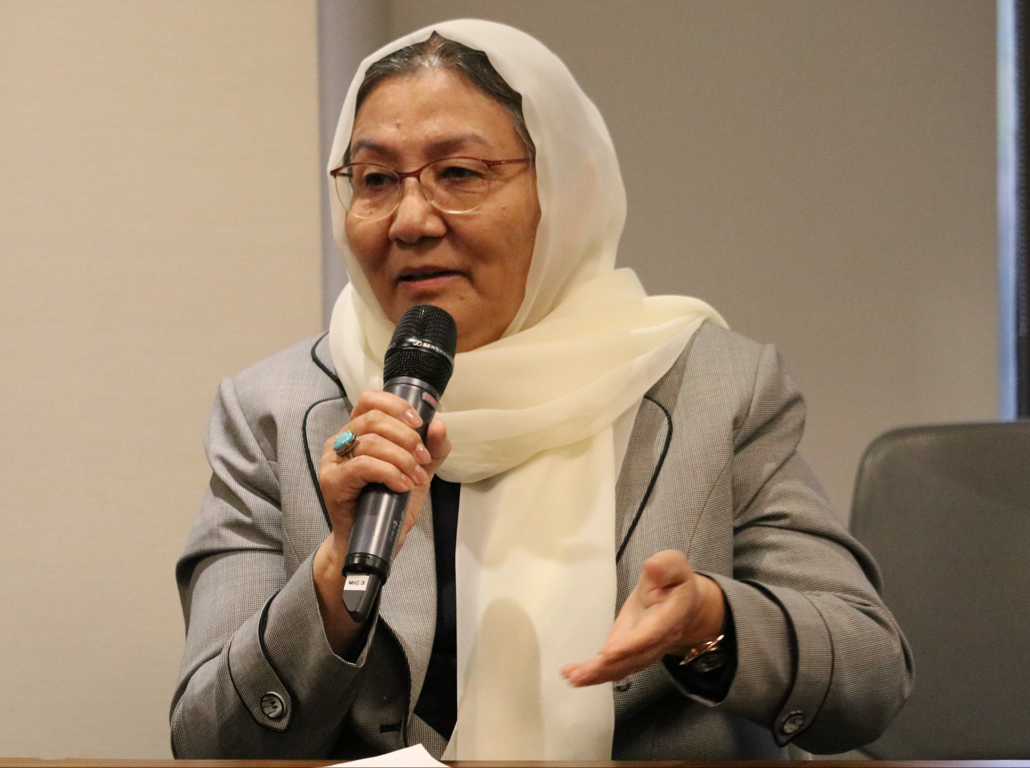
Habiba Sarabi discusses the Afghan women's movement at CSW67 in New York City in 2023.
In Afghanistan
WLP’s collaboration with Afghan activists and scholars is grounded in long-term support for women’s leadership, feminist solidarity, and rights-based advocacy in contexts of conflict, displacement, and political repression.
Since the Taliban’s return to power in 2021, Afghan women and girls have faced severe restrictions on education, employment, freedom of movement, and participation in public life. In response, WLP has worked with activists in Afghanistan and the diaspora to sustain networks of support, strengthen advocacy strategies, and preserve spaces for feminist organizing and civic engagement.
WLP is also expanding partnerships focused on sustaining leadership, professional development, and peer learning opportunities for Afghan women navigating remote and highly restricted environments. In collaboration with initiatives such as Aseel’s women’s fellowship programs, WLP is developing leadership and professional practice trainings that support Afghan women in strengthening skills related to collaboration, communication, problem-solving, and civic leadership while maintaining connections to broader networks of learning and solidarity.
A central component of this work is the Cross-Border Coalitions for Gender Justice (CCGJ) initiative, which connects Afghan activists and diaspora communities with feminist leaders across the region. Through workshops, mentorship, dialogue, and collaborative advocacy, the initiative supports movement sustainability in increasingly closed and restrictive environments.
WLP also supports youth-led gender equality efforts by equipping young women with advocacy, leadership, and digital organizing skills while fostering cross-generational and transnational networks of support.
In partnership with Afghan and Iranian women leaders, WLP has convened discussions on sustaining women’s rights movements under authoritarian conditions, including events held during the UN Commission on the Status of Women NGO Forum focused on technology, resilience, and feminist organizing in closed societies.
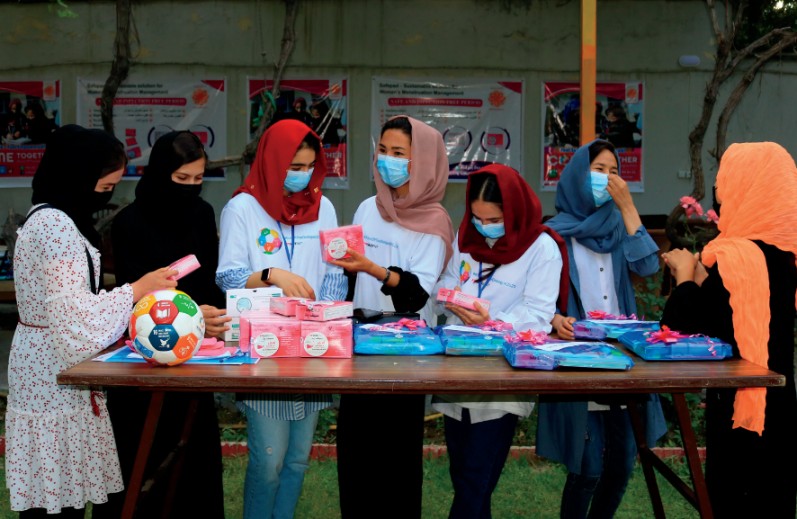
Young Afghan women hold awareness session on menstrual health and share hygiene kits.
Organizational Programs and Accomplishments
- Cross-Border Coalitions for Gender Justice (CCGJ): Connects activists across Afghanistan and diaspora communities to strengthen feminist organizing, collaboration, and long-term movement sustainability.
- Leadership Development and Mentorship: Provides training, workshops, and mentorship opportunities focused on advocacy, organizing strategies, digital engagement, and resilience-building.
- Youth Leadership Initiatives: Supports young women leaders through skills development, peer learning, and advocacy training centered on gender equality and civic participation.
- Professional Leadership and Remote Learning Opportunities: In partnership with Afghan-led initiatives and fellowship programs, WLP supports leadership and professional development opportunities for Afghan women navigating restricted educational and professional environments. Programs emphasize peer learning, communication, collaborative leadership, and long-term civic and professional engagement.
- Transnational Dialogue and Coalition Building: Facilitates exchanges and strategy discussions among activists, scholars, and feminist leaders across the region.
- Advocacy and Resource Development: Produces multilingual educational and advocacy materials on leadership, human rights, digital safety, and collective leadership in restrictive environments.
About Afghanistan
Afghanistan continues to face one of the world’s most severe crises for women’s and girls’ rights. Since the Taliban’s return to power in 2021, women and girls have been systematically restricted from education, employment, mobility, and participation in public life. These restrictions have sharply narrowed access to essential services and opportunities, compounding the effects of ongoing economic hardship and humanitarian pressure.
Despite these constraints, Afghan women continue to demonstrate remarkable resilience and leadership. Activists, educators, and community networks both inside and outside the country are sustaining efforts to provide learning opportunities, advocate for rights, and maintain networks of learning, solidarity, and mutual support.
- Population: 43.8 million
- Region: Southern Asia
- Government: Theocracy
- Women in Parliament: 0%
- Female Labor Force Participation: 5%
- Key issue: Defending women’s basic human rights and preserving spaces for women’s leadership and civic engagement.